


- Textile
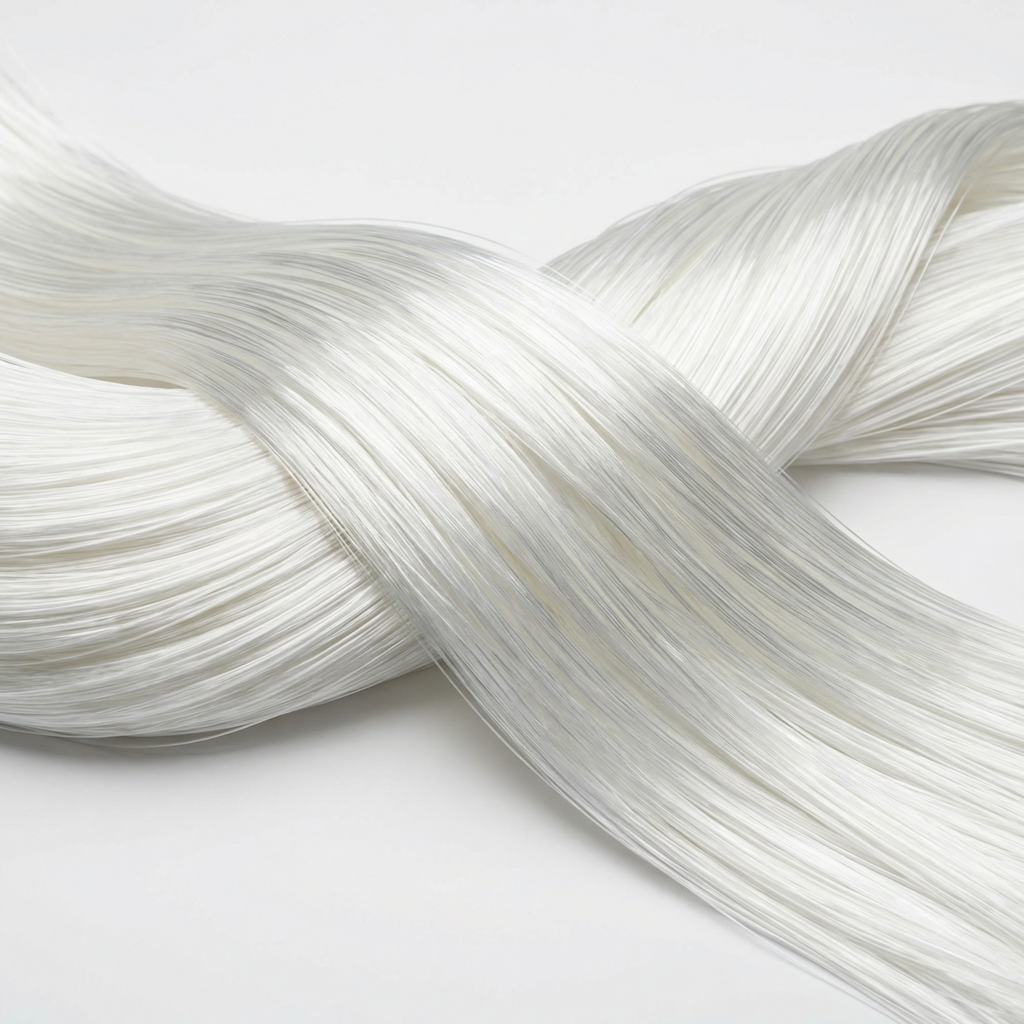
Polyester Fiber PSF
- HOME
- TEXTILE
- Polyester Fiber PSF
Polyester fiber (PSF) can be manufactured in two main ways.
On the one hand, virgin fiber is produced from purified terephthalic acid (PTA) and monoethylene glycol (MEG). On the other hand, recycled fibre is obtained from recycled PET shavings, polyester waste or post-consumer PET bottle flakes.
The process begins with polymerization. At this stage, the PTA is mixed with MEG at high temperature and pressure, forming a molten polymer. This is followed by cast-spinning, which involves extruding the hot polymer through small nozzles to form continuous filaments.
These filaments then go through a stretching process, which aligns the molecules and improves the strength of the fiber. Subsequently, crimping is applied, which is a technique to ripple the fiber and give it volume and elasticity. Finally, the filaments are cut into fixed lengths, thus obtaining the short polyester fibers.
In this way, the process makes it possible to obtain both virgin and recycled polyester fibres, adapting to different industrial needs.
Thanks to their versatility and performance, polyester fibers continue to expand their presence in new industrial applications.
Applications and Uses
Polyester fibers are widely used in textile and manufacturing industries.
Among its most common applications are:
- Fillings for clothes, duvets, stuffed animals and furniture.
- Spinning, after twisting them into yarn.
- Nonwovens, through compression processes.
- Use in sectors such as:
- Automotive
- Construction
- Furniture
- Medical devices
- Agriculture
Products we offer
| ORIGIN | DENIER | CUTTING LENGTH (mm) | TYPE | COLOR |
|---|---|---|---|---|
| Virgin/Recycled | From 0.8T to 20T (0.8 - 1.2 - 3 - 6 - 7 - 15) | 32 / 38 / 51 / 64 | HC / HCS / SOLID | RW/White/Black |